Personal essay · Financial independence and family life in Portugal · November 2026
Image supplied by Lauren.
We reached financial independence. So why the hell do we still worry about money?
When we retired early and moved to Portugal in 2022, our net worth was approximately $2.7 million. We’d done it. Years of working, saving, investing, and planning had finally paid off. We were financially independent, still relatively young, and about to start an entirely new life in Europe with our two kids. No more traditional jobs. No more waiting for vacation approvals. No more structuring our lives around an employer’s schedule.
We were free!
And then the stock market took a giant shit.
Our net worth dropped from $2.7 million to approximately $2.2 million.
Half a million dollars.
Gone from our balances while we were settling into a new country, learning how everything worked, and figuring out how to live without paychecks.
Welcome to early retirement!
Nobody handed us a congratulatory bottle of champagne and said, “By the way, here’s your complimentary financial existential crisis.”
But perhaps they should have.
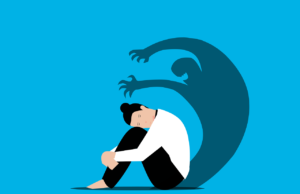
Because more than four years later, even though our investments have recovered and grown, we still worry about money. And I’m starting to realize that achieving financial independence and feeling financially secure are two very different things.
In this essay
- The market didn't care that we'd just retired
- I still hate taking money out of our investments
- Our brokerage account has one hell of a job
- The next six years are going to be expensive
- The market is never going to stop being scary
- I think some of my money anxiety started long before we had money
- Thank goodness for Mr. Scribbles
- Maybe worrying about money isn't entirely a bad thing
- We didn't retire early so we could spend the rest of our lives afraid to spend money
- Are you financially independent but still worried about money?
The market didn't care that we'd just retired
Let’s go back to 2022. We’d spent years preparing to retire early. We had investments, a withdrawal strategy, and a reasonable understanding of what our lifestyle would cost. Our plan was to sell approximately $7,500 worth of investments from our brokerage account every month, transfer the money to Portugal through Wise, and live on the proceeds. That was our initial 2022 plan in US dollars, not today’s euro household budget.
Simple enough. Except we’d never actually done it before. When you’re working, a market downturn is uncomfortable, but at least you’re still earning money. You can keep investing, buying shares at lower prices, and telling yourself everything will eventually recover. When you’re retired, that same market downturn feels very different. You’re no longer contributing money from your paycheck. You’re taking money out.
Every. Single. Month.
And when your net worth has just fallen by $500,000, selling investments to pay your rent feels a little like removing bricks from a house while hoping the roof stays up. That was the moment financial independence stopped being an exciting spreadsheet exercise and became our actual life.
I was scared shitless.
But we didn’t panic sell. We stuck with our investment strategy. We continued withdrawing the money we needed. We didn’t abandon our plan because the market was having a terrible year. And eventually, things improved. Our investments recovered. Then they grew beyond where we’d started. Today, our net worth is substantially higher than it was when we moved, even though we’ve spent the last four years withdrawing money instead of adding employment income.
Which is incredible.
And yet…
I still hate taking money out of our investments
Here’s something I didn’t anticipate about retiring early. You can spend years saving money for retirement, finally reach retirement, and then discover that spending the money you saved feels absolutely terrible. We’ve purchased two cars since moving to Portugal. Our first car, a Škoda Kodiaq, was purchased outright using money from selling our vehicles in the United States.
Earlier this year, we sold the Škoda, added some money from our investments, and bought a fully electric BYD. Also in cash. On paper, these were perfectly reasonable decisions. We needed a vehicle. We could afford it. We didn’t want to deal with financing a car in another country. But psychologically?
Ugh.
I absolutely hate seeing five figures leave our brokerage account. Not because I don’t enjoy having a nice car. I do. But because every dollar we take out of that account is a dollar that isn’t invested anymore. That’s a dollar that won’t benefit from whatever growth the market might deliver over the next ten, twenty, or thirty years. And unlike someone who is still working, I can’t just tell myself I’ll replenish the account with my next few paychecks.
There are no paychecks. There’s just our money, doing its thing, while we occasionally interrupt it to buy groceries, pay school tuition, or purchase a car. You’d think I’d be accustomed to that by now.
Nope.
Our brokerage account has one hell of a job
One reason I pay so much attention to our taxable brokerage account is that it has a lot of bills to cover. We retired decades before the traditional American retirement age. That means we need to carefully coordinate when and how we access different accounts. Right now, our brokerage account helps support our everyday spending. It also needs to cover taxes, including the US tax liabilities created by our Roth conversion strategy.
For anyone unfamiliar with the concept, a Roth conversion moves money from a traditional retirement account into a Roth account. The amount that hasn’t already been taxed generally becomes taxable income in the United States in the year of conversion. Why would we voluntarily create a tax bill?
Because we’re trying to reduce potential taxes later in retirement.
We’re currently covered by Portugal’s original Non-Habitual Resident tax regime, often called NHR 1.0, which gives us a limited window with potentially favorable Portuguese tax treatment for certain foreign-source income. The original regime was repealed for new entrants from 2024, with protections for existing and qualifying transitional cases. It isn’t something a new arrival can simply assume they’ll receive.
We’ve been using that period to make substantial Roth conversions. It’s a complicated strategy, particularly because we’re American citizens living in Portugal and have to consider tax rules in both countries.
We also have to be careful about the Portuguese treatment of Roth accounts, which isn’t automatically identical to the American treatment. NHR status alone doesn’t establish how a particular conversion is taxed in Portugal. The account and transaction need their own analysis. But the general idea is to create more flexibility in how we access our retirement savings over time.
Eventually, we expect to have access to converted Roth amounts under the applicable US withdrawal rules. Later, age 59½ generally removes the usual 10% US early-distribution tax on traditional retirement withdrawals. That doesn’t make those withdrawals free of ordinary income tax, and Portugal’s rules still need to be considered.
The details matter, especially the separate Roth IRA five-year periods and distribution ordering rules, and the cross-border tax treatment. A US penalty exception doesn’t decide the Portuguese tax result. For now, though, the brokerage account has several jobs. Pay for our lives. Help fund our Roth conversion taxes. Handle occasional large purchases. And hopefully continue growing.
No pressure, little brokerage account.
No pressure at all.
The next six years are going to be expensive
If you read my recent post about what our family actually spends living in Portugal, you’ll know we aren’t exactly living on bread, olives, and ocean breezes. We have two kids. They attend international school. We own a home. We like to travel. And our boys have the audacity to keep growing, eating, and needing things.
The next six years are likely to be particularly expensive. Our oldest is in sixth grade. We’re looking ahead at roughly six more years after this one before he finishes school. At our school, tuition gets more expensive as children move through the grades. We also expect additional expenses associated with upper-secondary education and examinations. Meanwhile, our youngest will move into primary school next year, which brings its own tuition increase.
Then there are extracurricular activities. Music lessons. Sports. School trips. Clothes. Shoes. The food bill that seems determined to become its own investment portfolio. And we still want to travel. We moved abroad partly because we wanted to see more of the world while our children were young enough to experience it with us.
I’m not interested in spending the next six years sitting at home protecting our portfolio from the terrible financial consequences of enjoying our lives. But we also have to be realistic. These are probably going to be some of our most expensive retirement years. Thankfully, we’ve planned for that. We also have savings and investments intended for our children’s futures. But knowing an expense is coming doesn’t necessarily make paying it feel any better.
Especially when you remember how much that money could become if you invested it instead. Ah, the joys of being financially independent and still obsessed with opportunity cost.
The market is never going to stop being scary
Another thing I’ve had to accept is that there will never be a moment when the investment world becomes completely predictable. There’s always something. Elections. Wars. Inflation. Interest rates. Political decisions. New technologies. Trade disputes. And now artificial intelligence is reshaping entire industries while everyone tries to figure out which companies will benefit and which ones might become obsolete.
Fantastic.
We’ve generally favored broad exposure to US stocks, including S&P 500 index investments, but we’ve also carried a significant concentration in semiconductor investments. Semiconductors have been an exciting area of the market for years. They’re also volatile. Recently, we reviewed our portfolios and decided to reduce some of that concentration.
We’re still heavily invested in technology and semiconductors, but we’re not quite as exposed as we were before. And that makes me feel better. Broad stock indexes can also hold many of the same technology companies, so owning an index fund doesn’t necessarily cancel out that overlap. The funny thing is, I’ve always considered myself fairly comfortable with investment risk.
I understand that markets fall. I know that long-term investing involves volatility. I can look at a historical chart and see the benefits of staying invested through downturns. But understanding risk intellectually doesn’t mean it’s particularly enjoyable to experience it. Especially when your entire financial future is tied to those investments.
There’s an enormous difference between looking at a market downturn and thinking, “Excellent, stocks are on sale!” And looking at the same downturn while thinking, “Well, that’s our grocery money for the next forty years.” We’re constantly reviewing our allocations and asking whether our strategy still makes sense. Are we taking too much risk?
Not enough?
Should we sell more of something?
Keep holding?
Do we have enough flexibility if the market falls sharply again?
I sometimes wish we could make a financial plan, put it in a drawer, and forget about it for ten years.
Unfortunately, I am apparently not that kind of person.
I think some of my money anxiety started long before we had money
Here’s where things get a little more personal. My parents divorced when I was young. My mother went from being a homemaker to working one or sometimes two jobs to support our family. She worked hard and did her best. But money wasn’t something I grew up assuming would always be there. There were big dreams, promises, and plans that didn’t always materialize. And I think I internalized some of that uncertainty.
This idea that you shouldn’t count on something until it’s actually happening. That financial security can disappear. That having enough today doesn’t necessarily mean you’ll have enough tomorrow. I don’t think those feelings automatically vanish when your investment accounts reach seven figures. They certainly haven’t for me. Here’s the strange part. I can look at our finances objectively and understand why our plan has worked so far.
I can see our investments growing. I understand the math behind long-term compounding and sustainable withdrawals. We’ve spent more than four years living this way, and our net worth has increased rather than decreased. There’s actual evidence sitting right there. But emotionally, a part of me still thinks: Are we really going to pull this off? Are we really going to live another forty or fifty years without traditional employment income?
Are our investments really going to support a comfortable life that entire time?
It sounds almost ridiculous when I say it out loud. But I think part of the problem is that I didn’t grow up knowing people who lived like this. I didn’t have examples of ordinary families who accumulated enough investments to stop working in their thirties or forties and then spent decades living comfortably. I’ve read about those people. I’ve followed the FIRE community. I understand that plenty of people have successfully retired early.
But there’s something different about seeing someone whose life feels familiar to you actually do it. For a long time, financial independence was something I was working toward. Now it’s something I’m living. And I think my brain is still catching up.
Thank goodness for Mr. Scribbles
Leon, affectionately known around here as Mr. Scribbles, is often the person who brings me back to reality. A couple of times a year, I start looking at the numbers and get myself worked up. I begin questioning our strategy. What if the market drops?
What if school costs increase more than expected?
What if we need a major home repair?
What if taxes change?
What if the brokerage account doesn’t last as long as we need it to?
What if, what if, what if. And Leon reminds me that we’ve actually thought about these things. We’ve planned for different scenarios. We review our investments. We’re not withdrawing money blindly and hoping for the best. And our financial situation is stronger than it was when we first moved to Portugal. He’s usually right.
Which is deeply annoying.
Sometimes I need him to remind me that we’re allowed to enjoy the financial independence we spent so many years working toward. Because apparently reaching FIRE doesn’t mean your spouse stops having to talk you down from imaginary financial cliffs.
Maybe worrying about money isn't entirely a bad thing
I’ve wondered whether there’s something wrong with the fact that I still worry. Shouldn’t I feel completely relaxed by now?
Shouldn’t financial independence mean never thinking about money again?
But the more I reflect on it, the more I think that’s an unrealistic expectation. We retired young. We have children. We own a home in another country. We’re managing investments that potentially need to support us for decades. Of course we need to pay attention. And honestly, some of that vigilance has served us well. We’ve avoided panicking during market downturns. We’ve continued reviewing our investments and adjusting when appropriate.
We’ve thought carefully about taxes, withdrawal timing, and how our financial needs will change over time. Paying attention to money makes sense. Letting financial uncertainty steal the enjoyment from the life that money has made possible is the part I want to change. There’s a difference between carefully considering whether to buy a €60,000 car and spending the next six months feeling guilty because you bought a car you could afford.
There’s a difference between monitoring your investments and letting every red day in the stock market determine your mood. And there’s a difference between preparing for possible problems and endlessly rehearsing financial disasters that may never happen. I’m working on those distinctions. Some days I’m better at it than others.
We didn't retire early so we could spend the rest of our lives afraid to spend money
I keep coming back to why we pursued financial independence in the first place. It wasn’t because we wanted to accumulate the largest possible number. We wanted freedom. Freedom to leave traditional employment. Freedom to choose where we lived. Freedom to spend more time together as a family. Freedom to travel, explore, and raise our children in a different environment. And we’ve done those things. We moved to Portugal. We bought a home.
We’ve watched our children adapt to a new country and build lives here. We’ve traveled. We’ve made memories. And we’ve had the extraordinary privilege of spending years together without organizing our entire family life around work. That’s the payoff. Not the number on the brokerage statement. The number is just what helps make the rest possible. I still don’t love watching money leave our investments. I still second-guess decisions.
I still worry about market downturns, taxes, and whether we’ve structured everything as intelligently as possible. And yes, I still occasionally need Leon to remind me that the sky isn’t falling. I’m starting to get more comfortable with the uncertainty that comes with financial independence. The flexibility we’ve built gives us room to deal with problems without letting every possible disaster dictate our choices. We have a plan. We keep reviewing it.
We make adjustments when we need to. And so far, it’s working. I can’t guarantee we’ll never face a financial setback. Nobody can. But I also don’t want to reach the end of my life with a beautifully preserved investment portfolio and a long list of things we were too afraid to do. We’ve worked too hard for that. So here’s to making thoughtful financial decisions, occasionally freaking out, and then getting on with the business of living.
Preferably somewhere sunny. With good food. And maybe one fewer spreadsheet. Although, let’s not get carried away.
Are you financially independent but still worried about money?
I’d genuinely love to hear whether other early retirees experience this. Does spending from your investments ever make you uncomfortable? Did you find it difficult to stop thinking like someone who was still accumulating wealth?
Or did you retire, throw away your spreadsheets, and never worry about money again?
If you’re in that last group, I’d particularly like to hear from you. I have questions.
And if you’re wondering what this whole financially independent life actually costs our family, check out We Retired Early and Moved to Portugal. Here’s What Our Life Actually Costs. Turns out financial freedom and inexpensive living aren’t necessarily the same thing.
This is our personal experience, not investment or tax advice. Our financial and tax arrangements are specific to our family, and investment returns and tax outcomes are never guaranteed.
For more of the backstory, read our FIRE journey, how we approached budgeting and investing and why your investment mix matters when retiring in Portugal.
If you’d like to talk about the practical side of moving with a family, I offer 60-minute Portugal consultations for €95. I share our experience; individual investment and tax planning belong with qualified professionals.
Sources for the tax context
- IRS Publication 590-B: IRA distributions, Roth ordering and five-year rules
- IRS Publication 590-A: retirement contributions and conversions
- Portuguese Tax Authority: original NHR repeal and transitional rules
Checked November 10, 2026. These sources explain general rules; they do not verify our private tax position. Net worth, spending and family details are our own account.
Planning a move to Portugal?
Get my free six-page Moving-to-Portugal Checklist by email. Decisions, documents and the practical details, all in one place. See what’s inside.
Confirm your email to receive the PDF. Future articles and consultation offers are optional.