Opinion · Facts and sources checked November 9, 2026. Our home purchase took place in 2024.
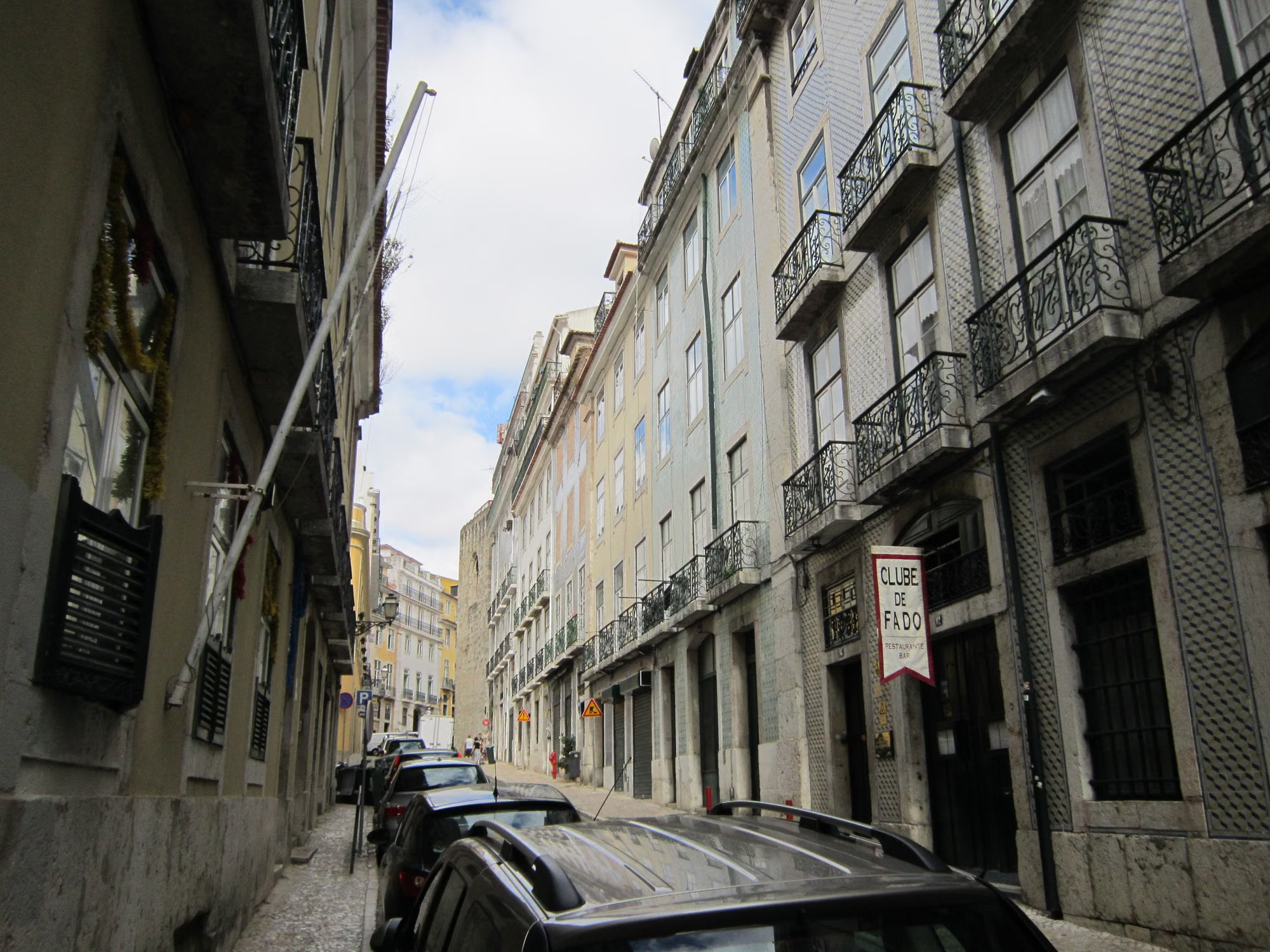
Lisbon, Portugal. Photo by Lajos Kristóf Kántor / Pexels.
And after buying a home here, I think buyers deserve better.
When we moved to Portugal in 2022, I knew that buying a home would be different from buying one in the United States.
Different country. Different laws. Different practices.
Fine. I expected that.
What I didn’t expect was how difficult it would be to get straightforward information about one of the biggest purchases a person can make.
We eventually purchased our home in 2024, and I wrote about that experience in my earlier post, Buying a Home in Portugal. Since then, I’ve spent more time researching how the Portuguese property market works.
And I keep coming back to the same question:
Why is it so difficult for buyers to make informed decisions?
In this article
- Finding a property shouldn’t feel like detective work
- An asking price isn’t proof of market value
- Agents have incentives. Buyers should understand them.
- Buying a home involves far more than negotiating the price
- Transparency would benefit Portuguese buyers, too
- What I would like to see change
- Portugal doesn’t have to become America
Finding a property shouldn’t feel like detective work
In the United States, I became accustomed to websites like Zillow and Redfin.
They’re not perfect, and I wouldn’t treat an estimated valuation as gospel. Zillow itself says a Zestimate isn’t an appraisal. But those sites put a tremendous amount of information in front of consumers.
You can often see previous sales, price changes, property tax history, comparable transactions, and other information in one place. The detail available varies by location and source; the US system has its gaps too.
In Portugal, my experience was very different.
We relied heavily on Idealista, individual brokerage websites, real estate agents, and a fair amount of independent digging.
Duplicate listings were common. The quality of descriptions varied. Sometimes listings featured beautiful architectural renderings instead of photographs of the property’s actual condition.
And I frequently found myself wondering whether the asking price had any meaningful connection to what similar homes were actually selling for.
I don’t think buying a home should require this much detective work.
An asking price isn’t proof of market value
This is something I wish more prospective buyers understood.
Just because someone lists an apartment for €750,000 doesn’t mean it’s worth €750,000.
It’s what the seller wants.
Those are two very different things.
To establish whether a price is reasonable, buyers need reliable information about comparable transactions, property characteristics, location, condition, and market trends.
Portugal does publish official housing-price statistics based on transactions. But area-level statistics don’t tell you everything about a particular property.
There is a difference between knowing what homes generally sell for in a municipality and knowing whether the apartment you’re considering is reasonably priced.
That distinction matters.
Agents have incentives. Buyers should understand them.
One of the biggest adjustments for us was understanding how real estate agents operate in Portugal.
When we found our apartment, we initially contacted the listing agent.
Communication didn’t go particularly well, and we eventually visited the development ourselves.
We negotiated directly with the developer and used an attorney to help us complete the transaction.
Avoiding agent commissions became an important part of our negotiation. Our attorney helped us work through the agency contract. You can’t assume a commission disappears just because you go straight to the developer.
That experience made me much more conscious of how commissions can influence the real estate process.
I’m not suggesting agents are inherently dishonest. There are excellent professionals who provide real value.
But buyers should understand who an agent represents, how that agent is compensated, and whether the agent’s financial interests align with their own. Portuguese agency law already requires written mediation contracts with remuneration terms. I’d want those relationships and fees explained before agreeing to anything.
Transparency about those relationships shouldn’t be complicated.
Buying a home involves far more than negotiating the price
Our apartment was a new build.
The building was finished, but we were still waiting for the municipal paperwork needed to complete our purchase. This was in 2024, and the process for a new build today may be different.
We waited months beyond the original anticipated timeline.
Our mortgage application was another adventure, particularly because our financial situation didn’t fit neatly into the traditional salaried-employee model.
These were expensive, consequential decisions.
And at various points, we felt like we were piecing together information from banks, attorneys, agents, developers, and government offices.
That’s a lot of moving pieces for an ordinary consumer to manage.
I don’t expect every process in Portugal to work the way it does in America.
But I do think there’s room to make the process clearer.
Transparency would benefit Portuguese buyers, too
I want to be careful here because I know how easily discussions about Portuguese housing turn into arguments about foreigners.
Portugal has a serious housing affordability problem.
In Eurostat’s October 1, 2026 release, Portugal’s house-price index was 16.5% higher in Q2 2026 than in Q2 2025. That’s the national annual change. Prices in individual neighborhoods and homes can move differently.
That’s an enormous increase.
And while foreign buyers are part of the housing market, it would be overly simplistic to blame the entire affordability crisis on immigration or international demand.
Housing supply, planning restrictions, construction costs, wages, financing conditions, investment patterns, and government policy all matter. The OECD’s 2026 review of Portugal’s housing affordability problem also points to supply constraints, permitting and tax-policy issues. Blaming foreign buyers alone leaves a lot unexplained.
But transparency is a separate issue.
Regardless of nationality or income, buyers benefit from access to reliable property information.
Portuguese families trying to buy their first home deserve good information just as much as international buyers do.
In fact, they may have even more to lose from an expensive mistake.
What I would like to see change
I would love to see a property market where ordinary consumers have easier access to reliable, understandable information.
Not just attractive advertisements.
Not just asking prices.
I’m talking about better access to historical property information, clearer explanations of property characteristics, meaningful market comparisons, transparent pricing histories, and the data needed to evaluate a purchase intelligently.
Some of that information already exists in government records and official statistics. Anyone can request a permanent property-registration certificate or simplified property information using the relevant property details. Those services help buyers check ownership and registered charges; the simplified information is not a certified extract.
I want to be able to find that information, understand it and use it, without exposing anyone’s private details. A legal-status record and a set of genuinely comparable sale prices answer different questions. Buyers need to understand both.
And that is where I think there’s a real opportunity.
Portugal doesn’t have to become America
I love living in Portugal.
Moving here was one of the best decisions our family has made.
But loving a country doesn’t mean pretending everything works beautifully.
Sometimes the response to a frustrating experience is simply, “That’s Portugal.”
Maybe.
But that’s not a particularly satisfying answer when you’re making a financial commitment that could affect your family for decades.
I’ve learned to appreciate that life here works differently.
I’ve also learned that different doesn’t automatically mean better.
A healthy property market should make it easier for people to understand what they’re buying, what they’re paying, and what risks they’re taking.
That’s not an American idea.
It’s just good consumer protection.
Want to talk through the practical side?
Thinking about moving to Portugal or preparing to buy a home here? I’ve been through both processes and offer 60-minute personal consultations for €95. I’m happy to share my experiences, the lessons we learned, and the questions I’d ask before making the same decisions again.
Book a Portugal call · €95 / 60 minutes
My consultations are based on personal experience and general practical information, not legal, tax, mortgage, or licensed real estate advice.
Further reading and sources
For our full purchase story, read Buying a Home in Portugal. For the wider money questions, there’s why account types matter when retiring in Portugal.
- Eurostat: Q2 2026 house-price changes: the 16.5% national year-on-year figure.
- OECD: Portugal’s housing affordability challenge: supply, regulation and policy context.
- Law 15/2013: agency contracts and remuneration; see Articles 16 and 19.
- Justice Ministry: permanent property-registration certificate and simplified property information: what buyers can already request.
Planning a move to Portugal?
Get my free six-page Moving-to-Portugal Checklist by email. Decisions, documents and the practical details, all in one place. See what’s inside.
Confirm your email to receive the PDF. Future articles and consultation offers are optional.


